



A World of Englishes
Insight

.webp)
Our identity can be heard before it is seen. Surprising but true: the way we speak carries a wealth of information about who we are. Within milliseconds, listeners process accents, intonation, rhythm, and stress patterns to form impressions about origins, social class, and personality, often before a single word is fully understood. Accents are more than sounds: they are audible markers of identity, carrying stories about our communities,histories, and experiences, making each voice unique.
In sociolinguistics, an accent is defined as a distinctive way of pronouncing a language, shaped by factors such as:
From a linguistic standpoint, accents are more than a collection of sounds, they are dynamic systems that shape how speech is produced and processed. Accents interact to create distinct auditory patterns that the brain can recognize almost instantly.
Collectively, these features make accents highly structured, perceptually salient systems. Even when listeners are not consciously analyzing sounds, they rely on these elements to navigate communication, distinguish speakers, and detect linguistic and social patterns. In this sense, accents are auditory frameworks that organize language in ways that are both functional and meaningful.
While accents reveal how we speak, it is important to distinguish them from dialects, which encompass much more than pronunciation.
This distinction matters because accents primarily signal identity, region, or social group, while dialects reflect a broader linguistic system tied to culture and community.
In audiovisual storytelling, accents become a powerful tool for characterization and world-building. Creators deliberately shape characters’ voices to convey intuitive clues about who a character is and where they fit in the story. For instance, an accent can signal social class: a refined,“standard” accent may suggest education and privilege, while a regional or nonstandard accent can bring up working-class roots or local authenticity. Similarly, accents communicate cultural and geographic identity, anchoring characters in a particular region or community without the need for lengthy exposition.
Research also shows that accents influence perception of morality or personality. Studies of animated characters (Gidney & Dobrow, 1998) indicate that villains are often given foreign or nonstandard accents, while protagonists usually speak in the audience’s dominant or “standard” accent. An article by The Atlantic editor Isabel Fattal showed it's the case in many Disney animated movies like The Lion King, in which Scar, the antagonist and evil Mufasa's brother, speaks with a British accent whereas Mufasa has a clear American accent. To Gidney, most of the time, villains are "marked just by sounding different", highlighting their difference and making for spectators and viewers a vague distinction between characters thar are "like them" or "not like them". Which can be true only to a certain extent.

Germanish accent

British Accent
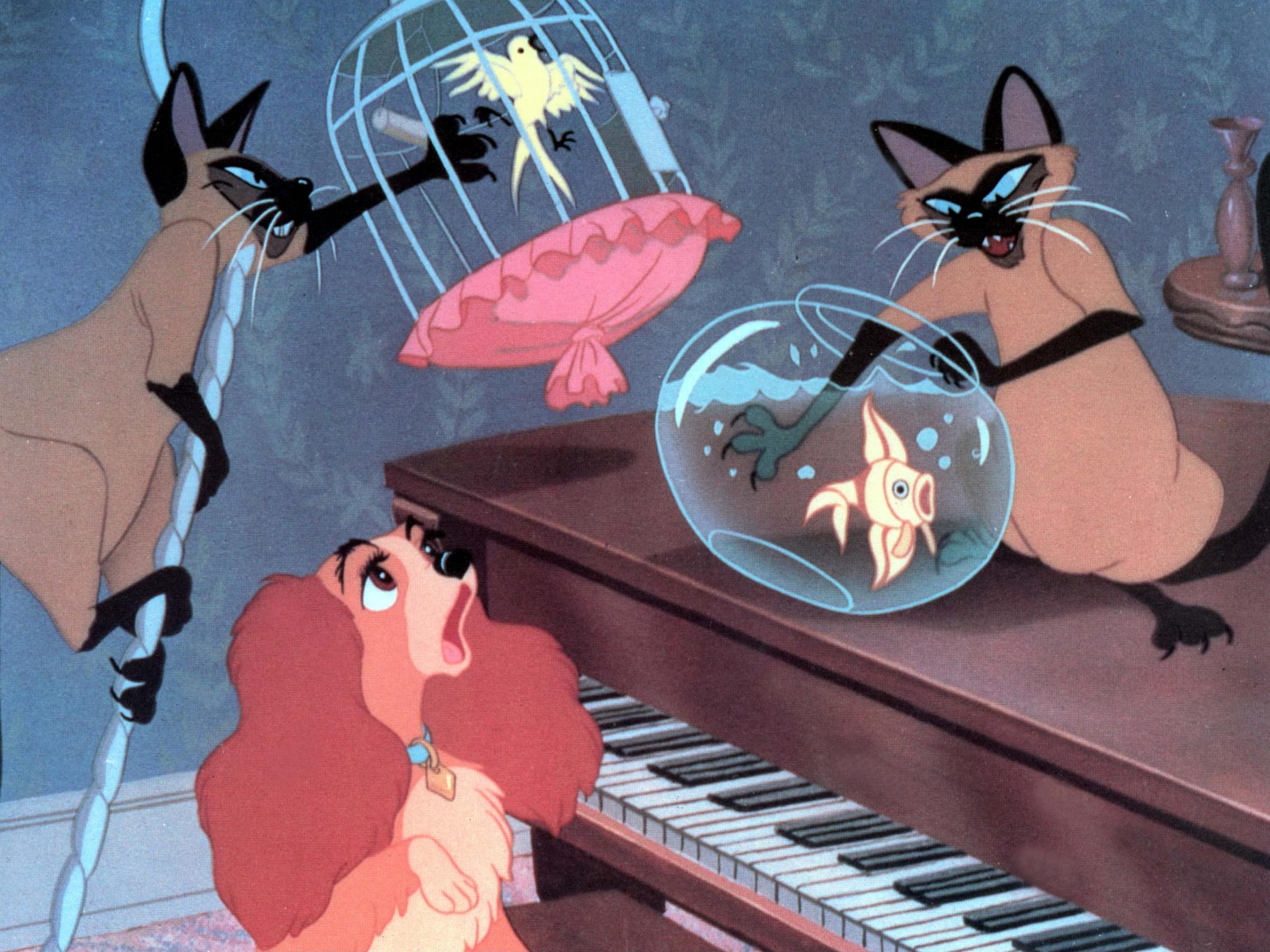
Asian Accent
Accents are not just markers of identity, they can also trigger bias. This form of language discrimination has been theorized in French sociolinguistics under the term glottophobia, coined by Philippe Blanchet in 1998, which refers to prejudice based on a speaker’s accent. Underlying this phenomenon is the broader concept of accent ideology (Lippi-Green, 1997), which describes how societies attribute prestige, neutrality, or stigma to particular ways of speaking. Certain accents are unfairly labeled as “rural,” “foreign,” or “less educated,” while others are considered prestigious or standard. These social evaluations are not neutral: they shape perceptions of credibility, authority, and social competence, affecting opportunities and interactions in professional, educational, and cultural contexts. Linguistic research shows that these judgments are often automatic, influenced by deeply ingrained societal hierarchies rather than by any objective measure of language ability.
“Native speakers are very sensitive to foreign‑accented speech... Even when told the speaker was simply repeating a sentence, listeners judged statements as less credible when delivered with an accent.”(Lev‑Ari & Keysar, 2010)
From a sociolinguistic perspective, this highlights that accents carry both linguistic and social meaning, and that understanding these layers is essential for anyone studying language, society,or communication. In artistic works, awareness of glottophobia and accent ideology also encourages creators to approach accents consciously and respectfully.
Understanding the social meaning of accents, their link to identity, culture, and bias, is one thing. Translating them effectively for global audiences is another challenge entirely. Accents are inherently indexical: they convey social, regional, or cultural information, rather than specific lexical content. This makes them difficult, if not impossible, to fully replicate in another language.
Before even considering translation and localisation, it’s important to remember a fundamental point: everyone has an accent.
Often, when people say someone “has an accent,” they mean it sounds different from their own local or standard variety. In reality, every speaker produces systematic phonological patterns that define their accent from subtle vowel shifts to rhythmic differences in speech. In this sense, there are as many accents as there are speakers, and labeling one as “foreign” or “incorrect” reflects only individual perception, not linguistic fact. Recognizing this helps and guides more thoughtful and respectful localization.
In audiovisual localization, accents are always a question of choices, and they can be summarized as:
Beyond these choices, ethical considerations are critical. Translators and creators must navigate the risk of reinforcing stereotypes or cultural prejudices in a new context. Just as glottophobia can unfairly stigmatize speakers in real life, poorly handled accent localization can perpetuate biases in media, turning a creative decision into a social problem.
When it comes to accents in audiovisual media, creators face a delicate balancing act. On one hand, accented casting is essential to enrich storytelling, give the character depth, reflect their specific identity, preserve the cultural context of the universe they inhabit, and make the narrative more authentic. On the other hand, careless casting or over-exaggeration can slip into caricature, reinforce stereotypes, and perpetuate bias. There is a fine line between representation and exaggeration, and overplaying an accent risks it being perceived as mockery or disrespect. And this question needs to be asked language by language.
A responsible approach to localization requires research, cultural sensitivity, and engagement with speakers from the represented region or community. Accents should not be turned into a performance but reflect real linguistic and cultural realities. In long-form series, games, or films, maintaining internal consistency is also key: characters’ speech patterns should align across scenes and episodes, preserving authenticity and audience immersion. When handled thoughtfully, accent use can create a richer, more representative work, giving voice to diverse communities and highlighting cultural nuance across languages.
And you, do you have an accent?




.webp)