Welcome to the Land of Smiles! Thailand is widely known for its people’s hospitality, strong sense of community, and deep cultural connections—but did you know it is also a true well of linguistic richness? Over 62 languages and dialects coexist across the country, though the most widely spoken remains Standard Thai, also known as Central Thai. There are about 37.7 million native speakers of Thai in Thailand, which is approximately half of the population, and around 39.9 million native Thai speakers worldwide. Thai belongs to the Kra–Dai language family, a group of tonal languages spoken across Southeast Asia and southern China. Within this family, Thai is part of the Southwestern Tai branch, which also includes several closely related languages and dialects, sharing similar linguistic aspects:
Isan (ภาษาอีสาน)
Region: Spoken primarily in the Northeastern provinces of Thailand (Isan).
Linguistic Aspect: Considered a dialect of the Lao language and is mutually intelligible with Lao.
Script: Historically used its own script, Tai Noi, but today uses the standard Thai script for writing.
Key Feature: Uses a different tone system and has vocabulary often distinct from Central Thai.
Northern Thai (คำเมือง - Kham Mueang)
Region: Spoken in the provinces of the former Lanna Kingdom (e.g., Chiang Mai, Chiang Rai, Lampang).
Linguistic Aspect: Has a simpler syllable structure than Central Thai, with fewer final consonants.
Script: Used the beautiful Tai Tham script historically. Today, standard Thai script is most common.
Key Feature: Often perceived as sounding softer or slower than Central Thai.
Southern Thai (ภาษาใต้ - Pak Tai)
Region: Spoken across the provinces of Southern Thailand, from Chumphon downwards to the border of Malaysia.
Linguistic Aspect: Known for being spoken very quickly and having a distinct, non-standard tone system (up to 7 tones).
Key Feature: Often employs different pronouns and grammatical particles than Central Thai.
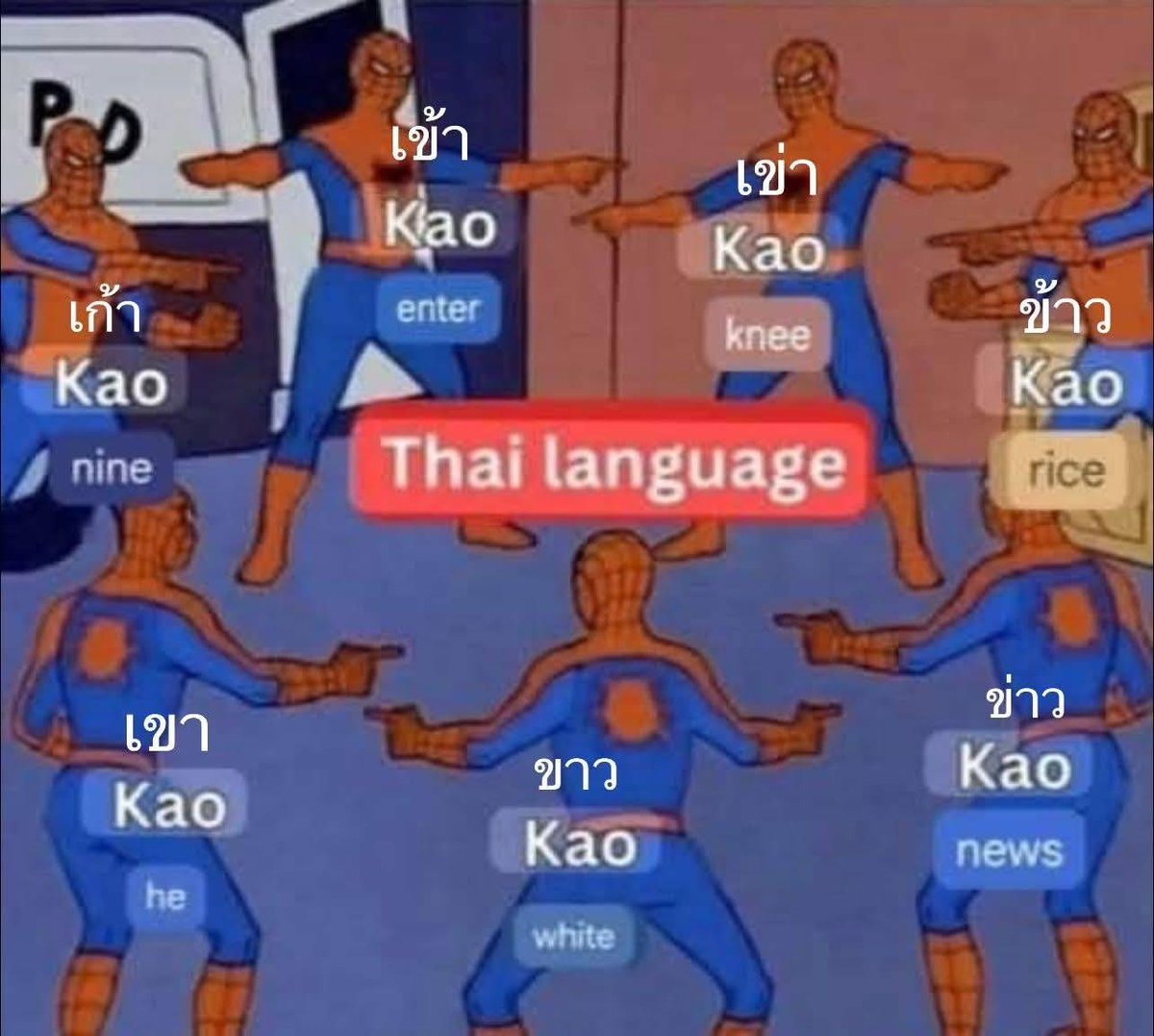
Thai is a tonal and analytic language, meaning that the pitch used when pronouncing a syllable can completely change its meaning, and words generally do not change form to indicate tense, number, or gender. Its typical syllable structure consists of a consonant or consonant cluster followed by a vowel, sometimes ending with a final consonant. Thai has five distinct tones: mid, low, falling, high, and rising. They differentiate words with otherwise identical sounds.
The language has around twenty-one consonant sounds and nine basic vowel qualities, along with several diphthongs. Because words do not inflect, meaning is often conveyed through word order, particles, or combining words. Thai vocabulary is rich and diverse, drawing on influences from Pāli, Sanskrit, Khmer, and, more recently, English, which adds layers of cultural and historical depth to the language.
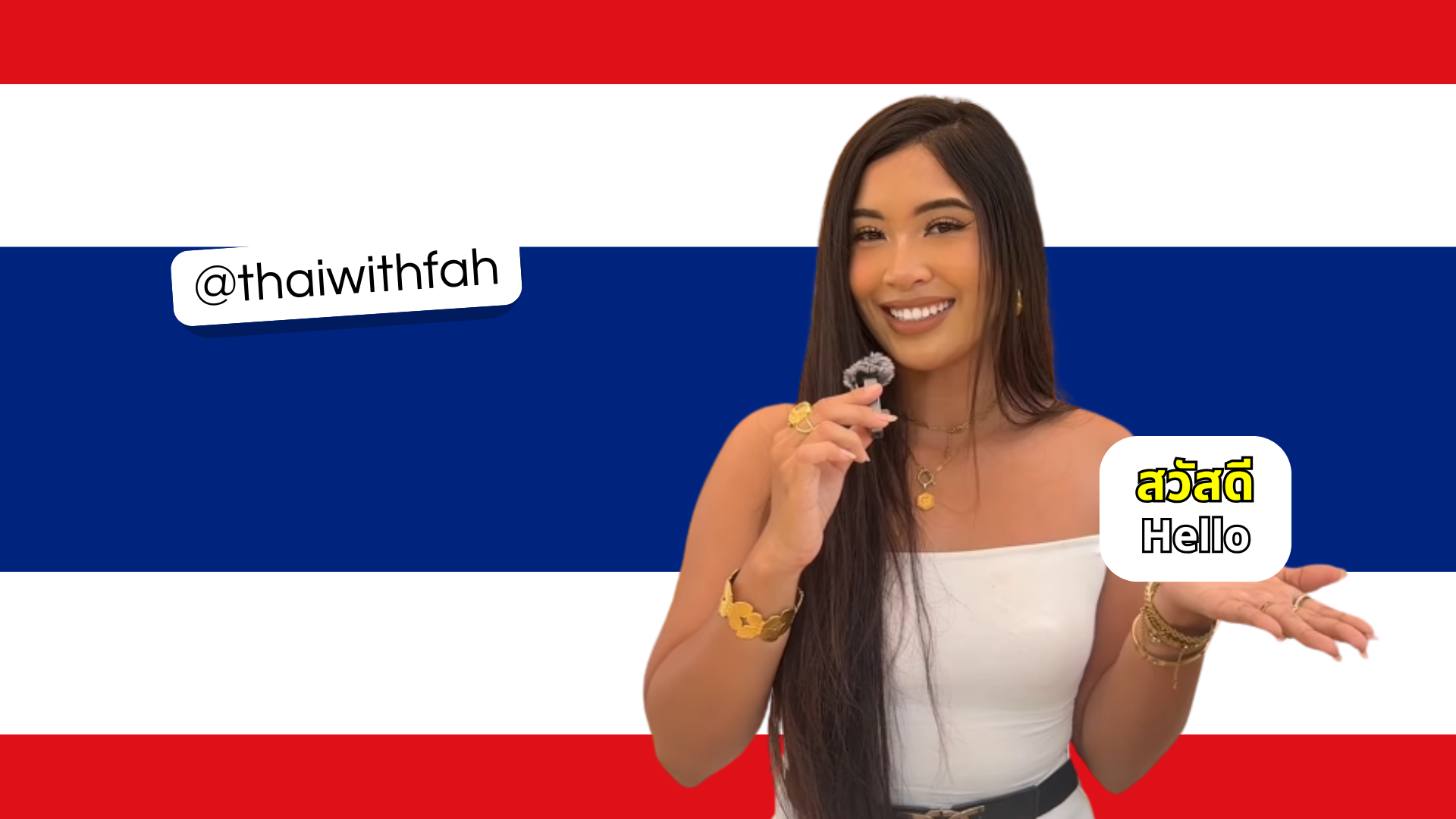
On her Instagram, you'll find a bunch of videos to learn everyday vocabulary, master pronunciation, recognize different regional thai accents, and discover more about thai culture!
Thai Essentials.
Planning a trip to Thailand? Master these essential basic words and phrases before landing!
It can be challenging to coordinate multiple vendors, content types, and languages, especially when you need to reach global audiences quickly. That’s where we come in. We help you deliver the best experience to everyone, everywhere.






.webp)