Video Game Localization Kit: Your Ultimate Guide

Blog

Building a video game requires time and resources to help different specialized teams craft a consistent experience. As the launch date approaches, you enter the final stages of development and begin thinking about localization, with one question in mind: how do you ensure players around the world experience your game exactly as intended? In a fast-paced world, localization is sometimes reduced to a step for quickly launching in international markets. So you send a spreadsheet to translators and import the text straight away. But translating your vision and bringing your universe to life across different cultures requires more than that, and if nothing has been prepared, you’re heading straight into a wall.

You need to prepare a Localization Kit or Lockit, and no, it is not just an export of your game content.

What is a Localization Kit?

Here's the thing: a spreadsheet full of raw and isolated text is not a Lockit as it can sometimes be called, but rather a text dump. A true lockit is the link between linguists and the development team. It’s not just an export of game content, but a comprehensive package of resources designed to provide as much context and information as possible. Far from being a single file, a well-built lockit brings together a wide range of assets, which we’ll break down in this article. Rather than simply giving translators words to convert, your lockit needs to act as a portal, an open window into your game’s universe, helping understand the story and connect with your characters, tone, and lore.

Why having one is important?

Putting together a lockit might feel like an extra step in an already tight production schedule, but it’s actually one of the smartest investments you can make. Treating localization as an afterthought can put your budget at risk and lead to negative reviews. Here’s how your lockit can become a real safeguard against those issues.

🎯 On Point Localization.

A well-built Lockit can be a game-changer for your localization process. After all the creative work behind your project, your story now needs to resonate at a global scale. A structured Lockit helps your localization team work efficiently and stay true to your game’s DNA. It removes guesswork, gives translators the right information, and sets up a successful translation phase.

🧩 Context-Driven Choices.

Context is key to precise translation. Words and sentences often have multiple meanings, and without context, translators are left to guess the intended meaning. This is the origin of many translation errors. A lockit prevents this by providing the necessary background, reducing the risk of immersion-breaking mistakes.

💬 Time Efficiency.

Time is one of the most valuable resources in game development. With a lockit, you empower your localization team to work almost fully autonomously and efficiently. Centralizing key information ensures everyone involved has instant access to the answers they need.

🛡️ Lore & Narrative Consistency.

You’ve invested countless hours crafting the tone, humor, and lore of your game universe. A lockit serves as the ultimate guide for maintaining consistency across all languages. It protects your narrative identity, ensuring that your game’s atmosphere and emotional impact are not lost in translation.


What Exactly Goes Into a Lockit?

If building a comprehensive package of resources feels overwhelming, take a deep breath, you don’t need to recreate everything from scratch. You already have what you need, creating a lockit is simply about gathering it all in one place. We have prepared for you an extensive checklist of what you need to make the perfect game lockit. Here are the categories of the elements you'll find below:

Source files Core assets & text
Visual references Art & screenshots
Game Design Mechanics & lore
Glossary Terms & definitions
Style Guide Tone & branding
Communication Channels & contacts


1. Source Files.

This is the first step in preparing your localization process: exporting the source game text. But how you organize and send it makes all the difference: format, order, notes, every detail matters.
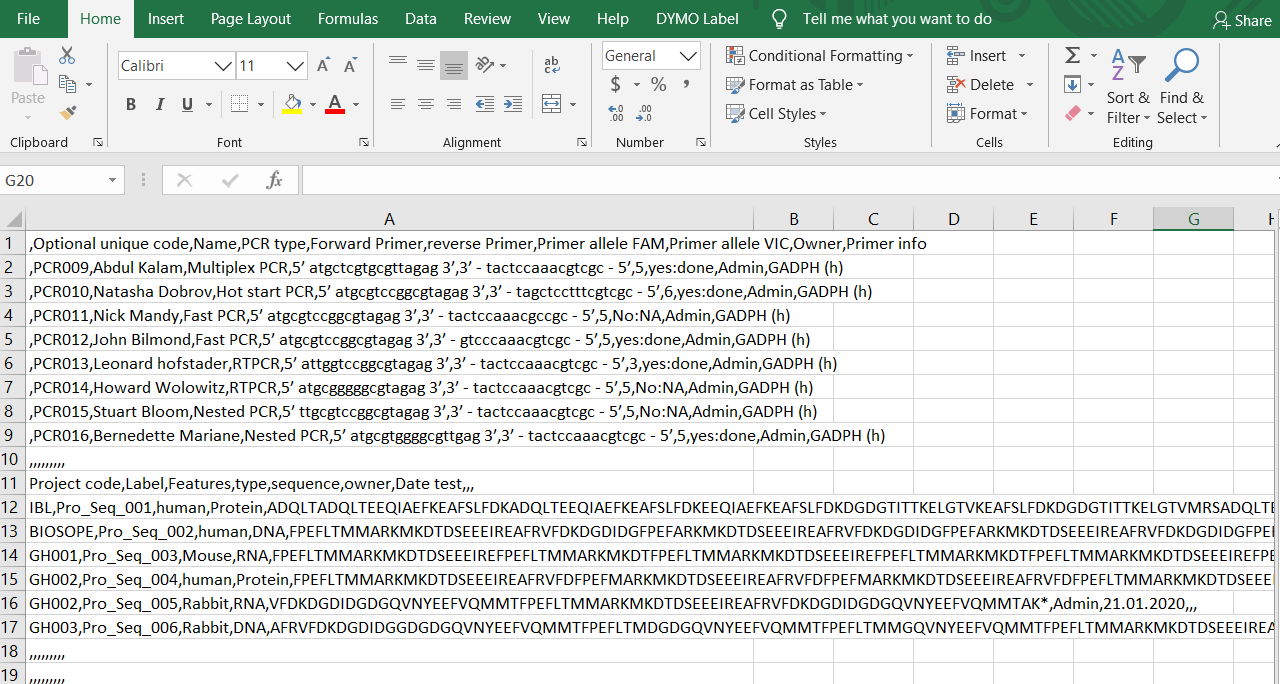
File Format

Example of structured format

Export your text using standard, structured localization formats. The exact file format matters less than the content organization itself.

Why: A structured document allows for clear and comprehensive organization of content, including game text, dialogue, and UI.
Learn More
You can choose different export formats depending on your production tools. A CSV file carries more risk than .PO or .XLIFF formats, as these better prevent unwanted changes, line errors, broken tags, and other issues. That’s why investing in a TMS can be a great option to protect your content and better organize your workflow.

String ID & Chronological Order

Chronological Order

Classify your string ID to keep text in the exact order it appears in game so translators can naturally follow the flow of the content.
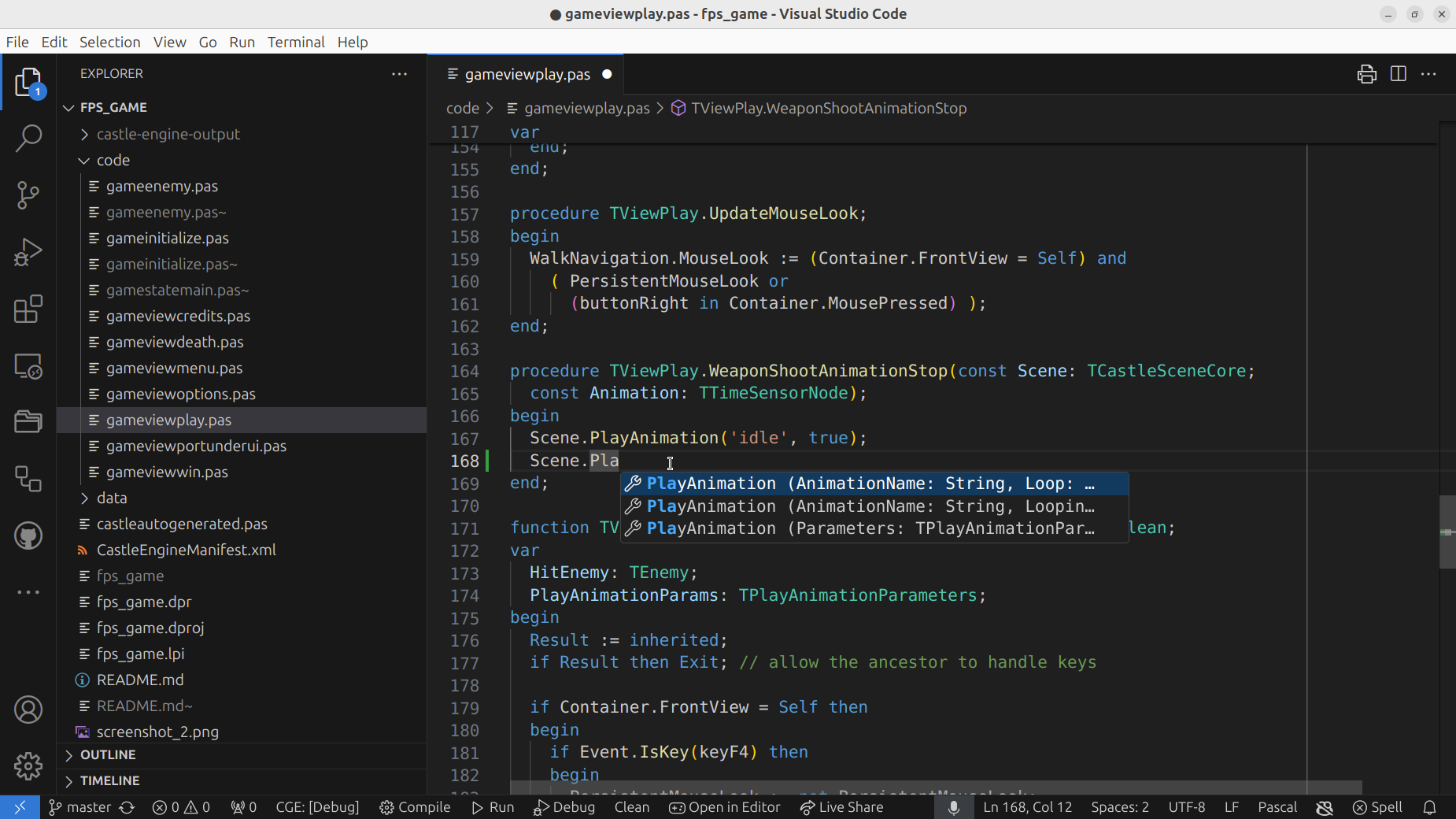
Why: Sorting text strings randomly destroys context, creates confusion, and wastes valuable time.
Learn More
Chronological order is essential, as the translation of a string often depends on the previous one. When it comes to dialogues, translators need to understand the interaction between characters. You can also include useful context in the ID itself, such as the scene, speaker, and line number, for example: “INTRO_PORTALSCENE_JOHN_DIAG_01”.

Developer Notes & MetaData

Developer Notes & MetaData

Add a notes column or metadata field to provide additional context when necessary, such as puns, cultural references, or ambiguous interactions.

Why: It helps linguists quickly find the information they need and choose accurate cultural equivalents rather than relying on literal translations.
Learn More
Feel free to include anything you think might be useful. This can include URL links to screenshots, or even audio memos, be creative! The more context translators have, the fewer questions they’ll need to ask during the process, and the more accurate the localization will be.

Variables

Variables in game engine

Clearly define what any dynamic code variables are. Sometimes they are explicit, like {PlayerName} or {Weapon}, but sometimes they are less clear, such as {%s}, {0}, or {1}.

Why: Translators need to know if a variable replaces a number, an item, a button, a name, or anything else, to correctly adapt the surrounding grammar.
Learn More
It’s important to add a note when a variable is not clear. This is especially critical in languages with grammatical gender, where ambiguity can create real issues. For example, in French or Spanish, if {%s} refers to a grenade (feminine) or a shield (masculine), the following adjective must change accordingly.
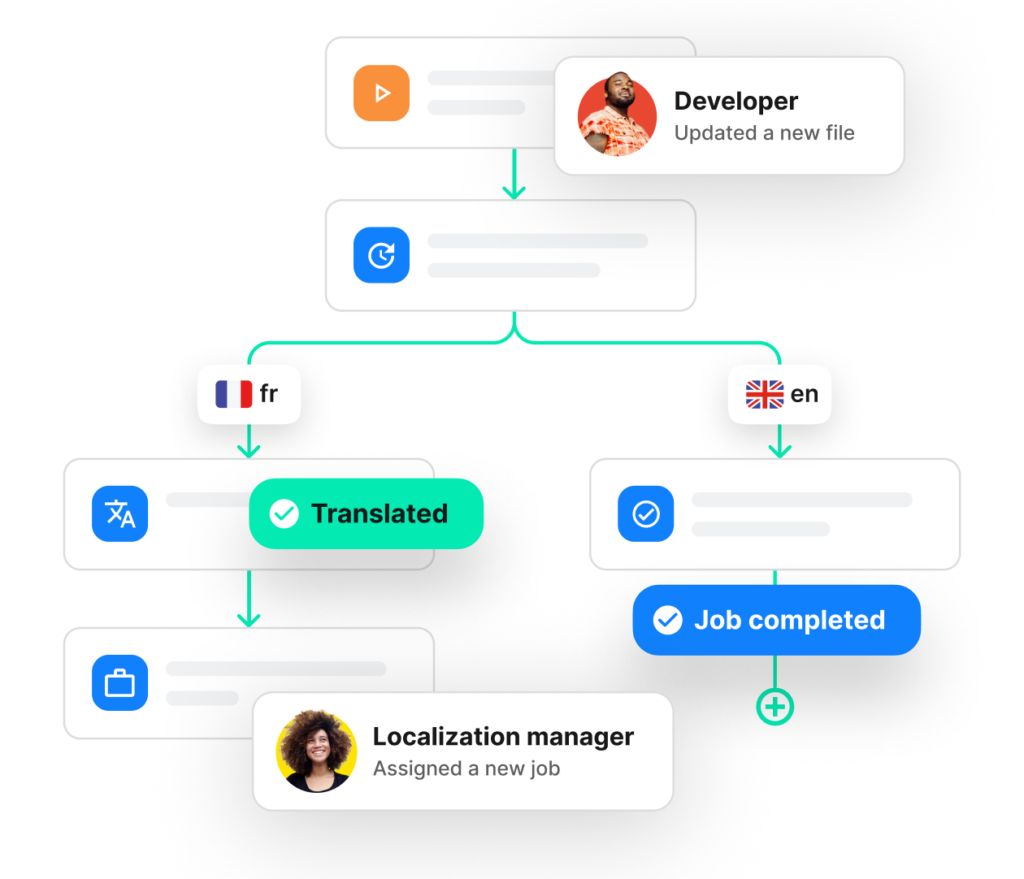
Translation Status

Translation Status

Whether you are using a TMS or just an Excel file, having a tag that tracks the current state of each text string is crucial. The most common status are Draft, Need Translation, Translated, To Proofread, Source Change, Reviewed or Validated

Why: It allows the development team and project managers to have a clear view of the production status, organize content batches, and prevents unfinished translations from slipping into live builds or even a released game.
Learn More
With a TMS, you can use preset statuses or create your own. The status of a string can be influenced by many factors. By maintaining clear status tags, you can easily filter and export only newly added or modified text to your localization team, rather than re-sending the entire game script.

Font Testing & Compatibility

Font Testing & UI Scaling

Test your typography early using approximate translations or pseudo-localization to ensure your chosen fonts support all target languages and character sets.

Why: A stylized font that works perfectly for Latin alphabets might lack glyphs for Cyrillic, Arabic, or Asian languages, resulting in missing character boxes (known as "tofu") or broken text layouts.
Learn More
It is highly recommended to establish fallback fonts early in production. If your primary game font doesn't cover certain alphabets (like Kanjis), find visually equivalent types for those specific languages to maintain your game's aesthetic and immersion. Additionally, testing with localized dummy text helps catch UI clipping issues early, as target languages can expand text length significantly compared to the source.

2. Visual References.

Translating text without seeing the screen is like trying to parallel park blindfolded. Translators need to experience your game and have access to visual elements to reinforce their understanding of the context.

Playable Builds, Betas & Demos

Gameplay video example

If you have a stable beta version or a demo, give the linguists access to play it directly.

Why: Translators need to experience the mechanics, pacing, and overall vibe so they can accurately capture the game's atmosphere in their writing.
Learn More
Even an unpolished, buggy build is incredibly valuable. It helps translators understand the game’s spatial awareness, combat speed, environment, character personalities, storytelling, and much more. Experiencing the game firsthand by playing it heavily influences the quality of localization because translators can fully immerse themselves as players.

Images & Videos

Images and Videos example

Playing the game takes time, and even when translators have already played it, they may still need a refresher. By providing recorded gameplay, walkthrough videos, or images, developers can make contextual understanding much easier.
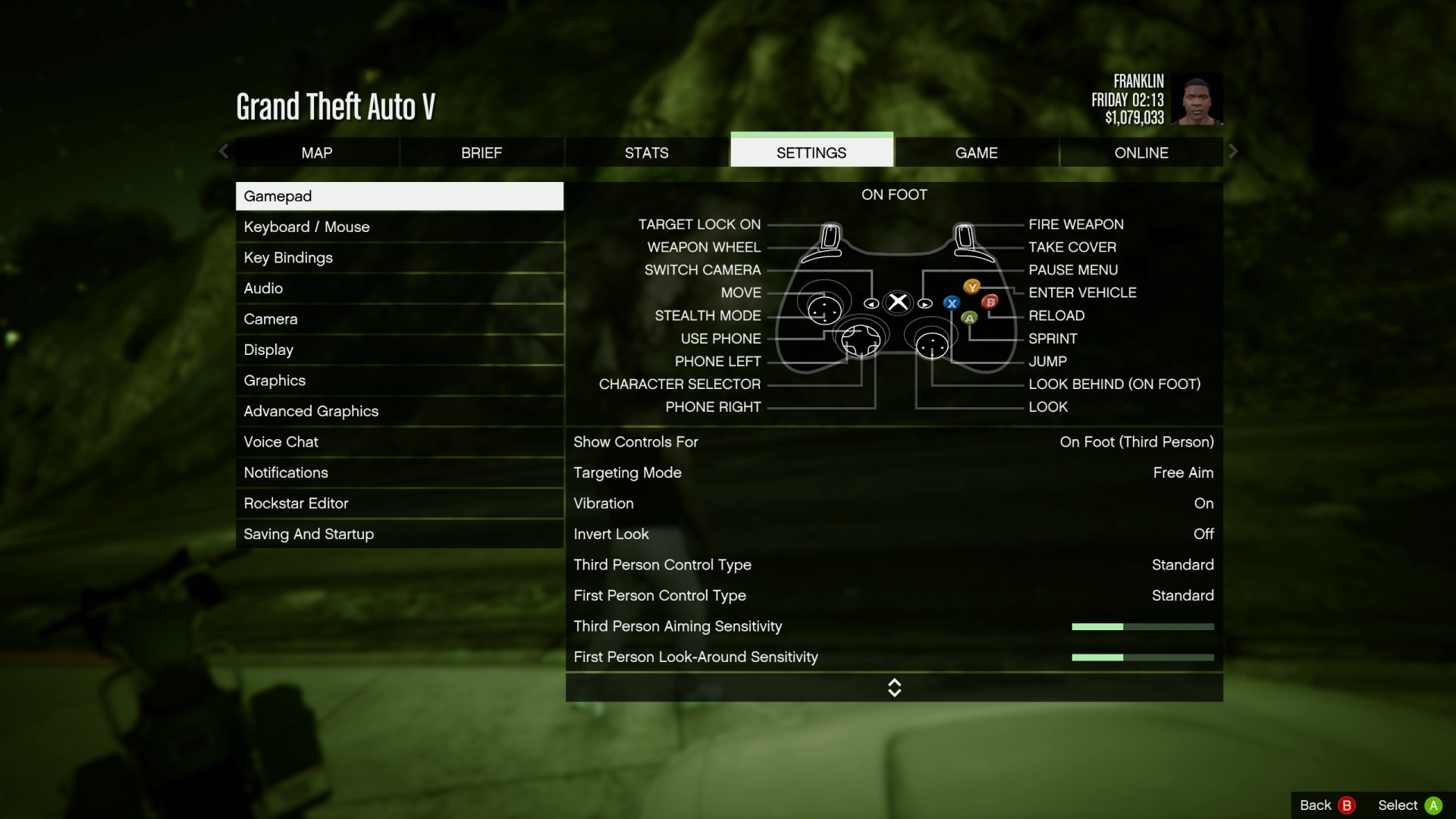
Why: Visuals are the ultimate context. Seeing how a cutscene plays out, watching a walkthrough of a level, or seeing what a specific item actually looks like prevents immersion-breaking mistranslations.
Learn More
The goal is to give translators a precise understanding of exactly what the player is experiencing at any given moment. Not all game content will require visual assets, and translators may request some during production, but it is always better to anticipate these needs by providing images and videos of key moments in the game.

UI Screenshots

UI Screenshot example

UI elements usually require careful attention. Providing clear images of menus, inventory screens, skill trees, and dialogue boxes helps anticipate potential UI issues.

Why: Translating UI content blindly is risky. Linguists need to understand the physical constraints of your UI so they know exactly how much space is available before text overflows.
Learn More
Language or text expansion is the real danger when it comes to UI content. From a language to another, text can expand length by 20% to 30% compared to the source which is usually English. Seeing the exact pixel dimensions and layout of a button or dialogue box allows linguists to adapt their wording to fit the UI perfectly from day one, saving you hours of costly LQA fixes later. You can also implement character limits for these specific lines to ensure translators know precisely how much space they have.

3. Game Design Document.

Think of this as the master guide to your game. You don't have to share the entire GDD, but streamline the main creative pillars to make sure linguists and translators can soak in the lore atmosphere.
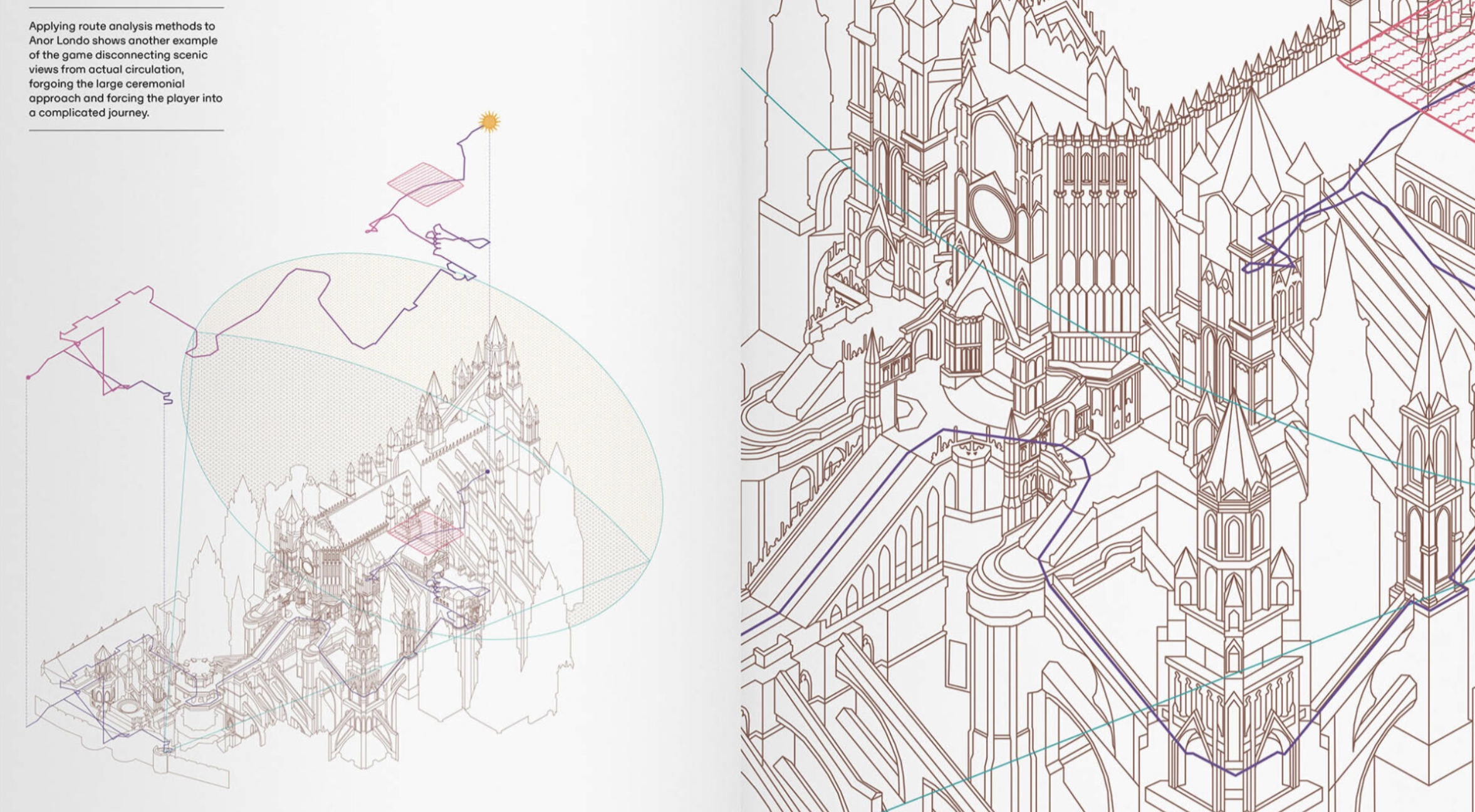
World-Building

World-Building

Provide an overview of the core vision of a game, including its mechanics, gameplay systems, story, characters, level design, user interface, and technical requirements.
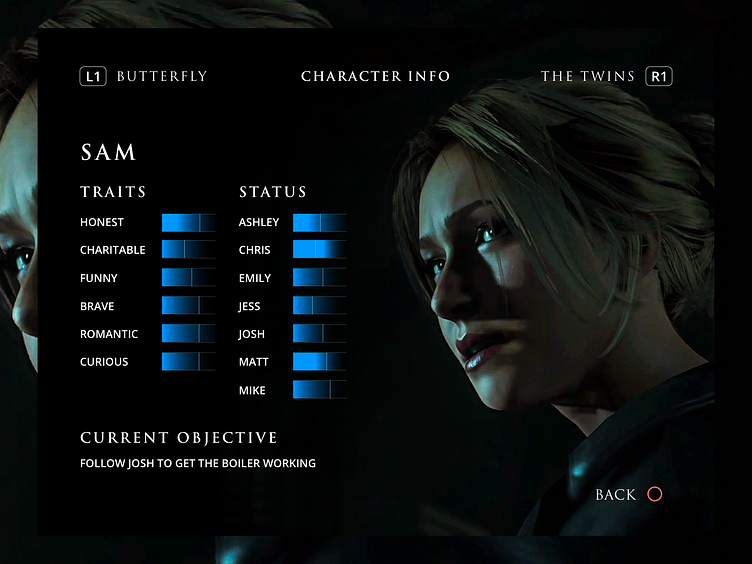
Why: Translators need to understand the core pillars of the game’s universe so they can ensure their writing uses the right vocabulary and tone, staying fully authentic to your game’s lore.
Learn More
A gritty, post-apocalyptic horror world requires vastly different vocabulary than a high-fantasy RPG adventure. Providing this lore upfront allows linguists to establish the right terminology and atmosphere from day one, rather than realizing halfway through that their wording feels out of place. It also helps translators research specific terminology, explore inspirations from other games, and draw from a wide range of relevant references.

Character Profiles

Character Profiles

Share your characters sheets, including concept arts, names, ages, physical descriptions, and distinct personality traits.

Why: Translators need a clear picture of who is speaking in order to accurately capture their unique voice, tone, and mannerisms.
Learn More
Giving translators access to character backgrounds and quirks ensures they can adapt speech patterns effectively, helping each character maintain a distinct, recognizable voice in the target language. This is especially important for narrative-driven games, where characters play a central role in the experience. It would be a shame to distort their personality due to a misunderstanding of who they are.

Relationships & Dynamics

Relationships & Dynamics

Clearly map out the relationships between characters, how they are connected, and what they think of one another.
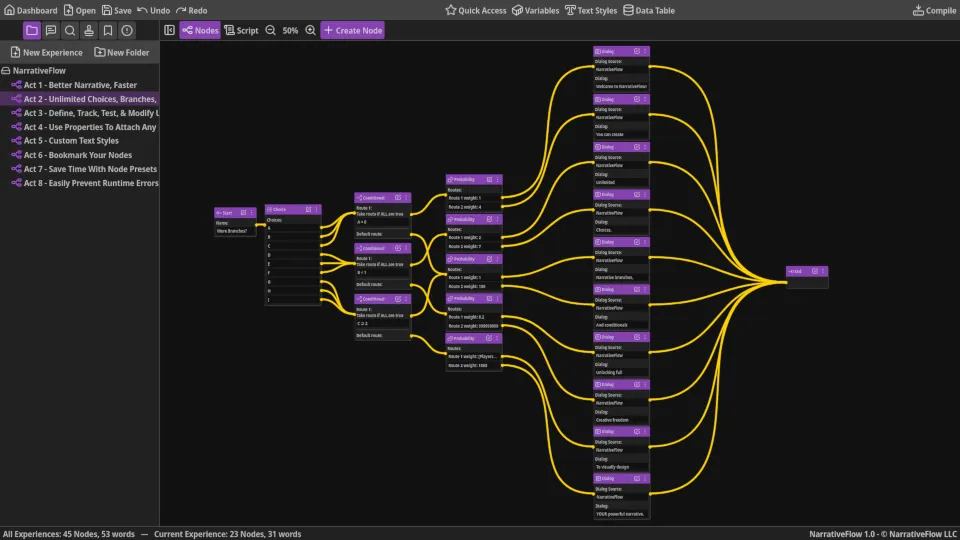
Why: Social hierarchy is especially important in many cultures and can have a strong impact on language. It determines whether a character uses formal or casual forms of address, as well as the words they are most likely to use with specific individuals.
Learn More
Missing social interactions can undermine character dynamics. If a relationship evolves over the course of the story, for example, two bitter rivals slowly becoming trusted allies—the localization team needs to know exactly at which chapter or dialogue line that shift occurs. Relationship information is crucial to staying true to the story’s progression.

Dialog Tree

Dialog Tree

Provide a clear flowchart or visual map of branching conversations, showing exactly how player choices connect to responses.

Why: Translators must understand the various branches of a conversation. Dialogues need to remain grammatically and logically coherent, no matter which path the player takes.
Learn More
A single question might follow three or more different player choices. In non-linear games, text is often exported into spreadsheets as scattered, disconnected string fragments. If linguists don't know the exact prompt a player is responding to, the localized conversation will feel completely disjointed. A visual dialogue map acts as a compass, ensuring the narrative remains cohesive across every possible branching path.

4. Glossary.

This document will act as your specific game lexicon, containing all linguistic assets and unique vocabulary proper to your game, allowing to set the foundation that will support the entire translation team.

Proper Nouns

Proper Nouns example

Include names of characters, cities, factions, planets and so one. Then decide if they need to be localized or not.

Why: A locked glossary ensures that every occurrence of proper nouns is translated consistently.
Learn More
Linguists working on the project should use the same approved terminology from the tutorial through to the end. If multiple translators are working on the same language, this helps maintain consistent wording, supported by a shared terminology base available to all linguists. If proper nouns are not kept as in the source and need to be localized, this often becomes a transcreation task that should be locked once validated.

Items & Weapons

Items & Weapons example

Establish a list for loot, gear, materials, weapons, spells and more. This includes defining standardized naming rules, contextual usage notes, and references.

Why: These terms are essential to player immersion: they are central to the gameplay and appear frequently throughout the experience. They need to be clear and consistent in order to properly guide the player.
Learn More
These terms often follow specific word-formation rules and are usally displayed in UI elements. Defining rules in your glossary helps prevent translators from breaking the naming system, which could otherwise lead to text overflowing or create confusion in the use of these elements.

Certification

UI Elements example

Certification ensures game text follows each platform’s required terminology and compliance rules.
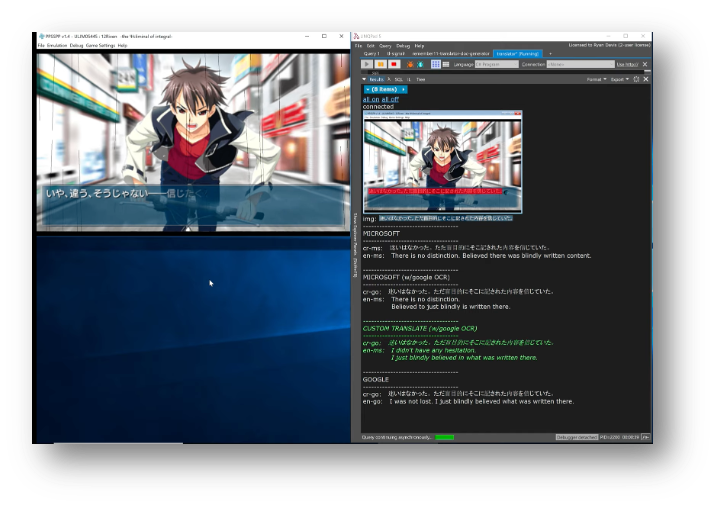
Why: It’s essential because platforms enforce strict wording standards, failing to follow them can delay release and require rework.
Learn More
It typically covers platform-specific terms for UI, controls, system messages, and more. This is usually managed by localization teams before QA and submission, but the studio can already prepare for it by identifying the target platforms and organizing the content so translators understand which version applies to each one. This can be done by separating strings by platform or by integrating dedicated variables.

DNT (Do Not Touch) & IP Terms

Do Not Translate list example

This includes any terms in the glossary that either need to remain unchanged from the source language or have specific IP-related translations.

Why: It prevents translators from accidentally modifying trademarked terms or translating terms that should remain in their original form.
Learn More
A strict DNT list and an IP terminology termbase act as a critical safety net. They explicitly instruct localization tools and CAT (Computer-Assisted Translation) software to lock specific translations. This is essential to prevent errors, reduce term inconsistencies, and save time during terminology checks and LQA.

5. Style Guide.

While your glossary ensures specific terms are used consistently, your style guide defines the broader picture of your tone, writing personality, and target audience.
Target Audience

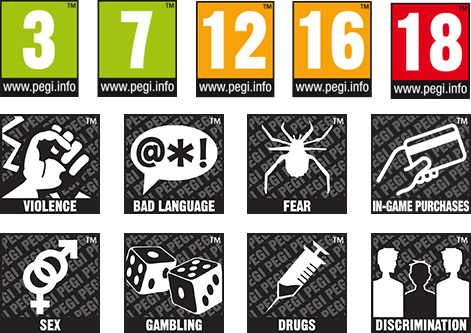
Target audience age ratings

Clearly define who the game is intended for and the target age group, but keep in mind that age rating strictness varies widely across the globe.
Why: It directly shapes how the content should sound, what is acceptable, and how far localization can go.
Learn More
Organizations such as PEGI (Europe), ESRB (North America), and CERO (Japan) each apply their own standards. To simplify this, the IARC (International Age Rating Coalition) was created to encourage greater consistency across regions. However, a mild joke or insult that is perfectly acceptable for teenagers in one culture might push a game into an 18+ rating in another. Knowing the precise target age range allows translators to adapt sensitive content, ensuring it remains compliant and culturally appropriate for each market.

Tone & Atmosphere

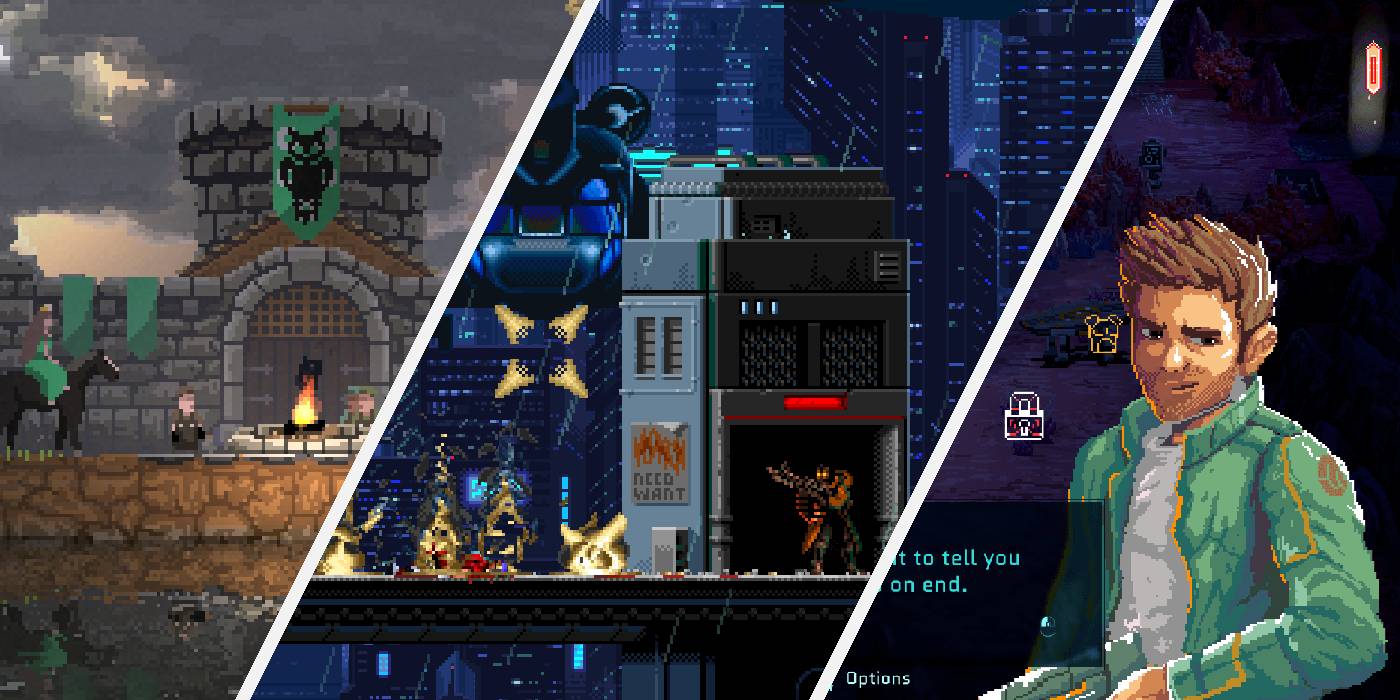
Tone and atmosphere examples

Specify the narrative tone, whether it should feel gritty and cyberpunk, whimsical and medieval, or sterile and corporate.

Why: It sets the direction of the writing and ensures that the emotional resonance and atmosphere created in the source language are faithfully carried over into every other language.
Learn More
The style guide acts as a creative compass. It works as a set of rules that defines how the game should be written in every language. It covers tone, terminology, grammar, references, formatting, and cultural guidelines to ensure consistency and preserve the game’s voice and intent across all languages.

Vocabulary Rules

Vocabulary rules and language style

Outline any specific phrasing styles, slang guidelines, or forbidden words.

Why: Keeps character voices distinct and prevents immersion-breaking mistakes, like modern street slang accidentally slipping into a high-fantasy epic.
Learn More
If your game features a unique universe with multiple inspirations or in-world idioms, linguists need to know which terminology they can or cannot use in the target language. They can also be guided on approved wording and provided with literary references or sources of inspiration to draw from. Providing a clear list of forbidden real-world terms ensures that your custom lore remains consistent and intact.

6. Communication Tools.

No matter how comprehensive your Lockit might be, localization is a deeply human process, and questions will inevitably come up. The secret to keep your production timeline on track isn't just preventing questions but managing them efficiently. That's why establishing a structured communication pipeline can transform potential development bottlenecks into a smooth and collaborative workflow.

Centralized Communication

Centralized Communication

Establish a unified communication channel for project managers and translators to ask questions and clarify ambiguities with the developers.
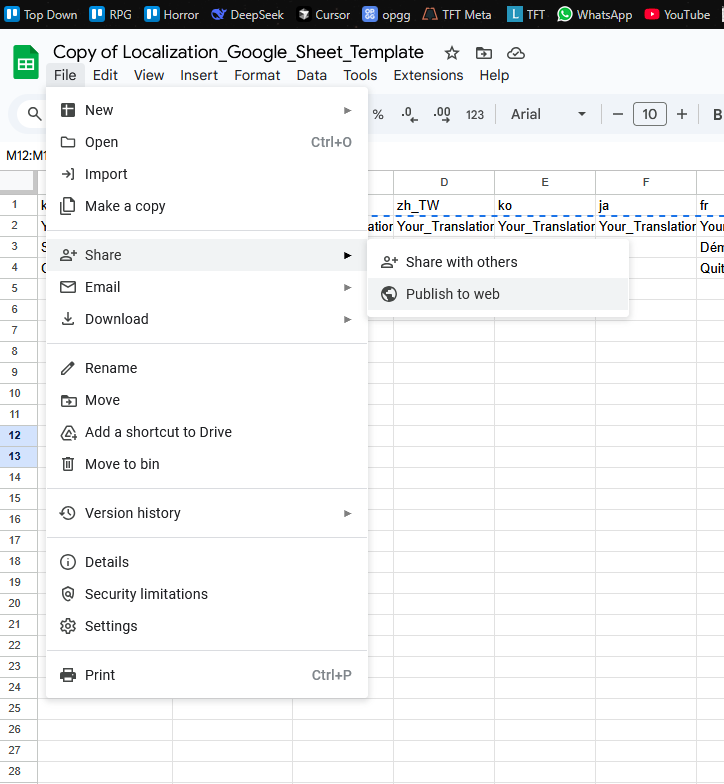
Why: Eliminates chaotic, scattered email chains. Even with a perfect LocKit, questions will arise, and managing them efficiently is key to hitting your deadlines.
Learn More
No matter how comprehensive your LocKit is, edge cases and unforeseen context questions will always pop up during the localization process. You need a streamlined Q&A process, ensuring translators are never blocked for long and your development sprints stay entirely on track.

Query Sheet

Live Shared Document

Create a unified document used by linguists to ask questions about unclear or ambiguous elements in the source text and to flag specific string IDs.

Why: Centralizing questions avoids having too many separate messages and allows all questions to be shared with all translators.
Learn More
A shared live document creates an incredibly powerful, collaborative ecosystem where every single language team sees the answer instantly—saving you from answering the exact same question 10 different times. It typically includes items such as missing context, unclear character intent, inconsistent terminology, UI constraints, or cultural concerns. The localization team or developers then review and answer these questions along the way to ensure the translation is accurate and consistent with the game’s intent. It often even highlights issues that were not previously detected by the development team.


The Best Investment for Your Game.

Building a comprehensive, well-structured game localization kit is everyone’s concern, from the dev team and producers to narrative designers and even concept art teams. It’s not just another task in your development process; it is your development process. Centralizing everything is key to unlocking successful localization and pleasing a global audience.

By organizing your workflow and taking the time to bring together all key elements: source files, visual context, game design, glossaries, style guides, and communication, you set your localization team up for success. The time you invest today in creating a loc kit will certainly save you weeks of bug fixing, protect your creative vision, and ensure it is carried perfectly across the world.

So now you know.

publication date
Published on
4/5/2026
share this article

Anything else?
Feel free to reach out to us at any time!

Get in touch

Read More.

Join the
Global Race
It can be challenging to coordinate multiple vendors, content types, and languages, especially when you
need to reach global audiences quickly.

That’s where we come in. We help you deliver
the best experience to everyone, everywhere.